🐻 Misha, Orsi, and Bears
There’s one fact about bears that makes me absurdly happy every time I remember it. In Slavic languages, the word “bear” is actually a euphemism. Originally, we had a perfectly normal word—Greek arktos. But then the Slavs saw an arktos in real life and, just in case, decided it would henceforth be the-one-who-must-not-be-named. Or the-one-who-knows-about-honey. You never know—say its name too loudly and it might hear you. And come.
Germanic languages did the same thing. Bear and other b-words are also euphemisms. So you could have, say, Attila the Hun conquering half of Europe, terrorizing entire nations—but still treating the shaggy one with respect. Like, no no, that’s not that creature, that’s just the brown one.
BEARS are very cute KILLING MACHINES
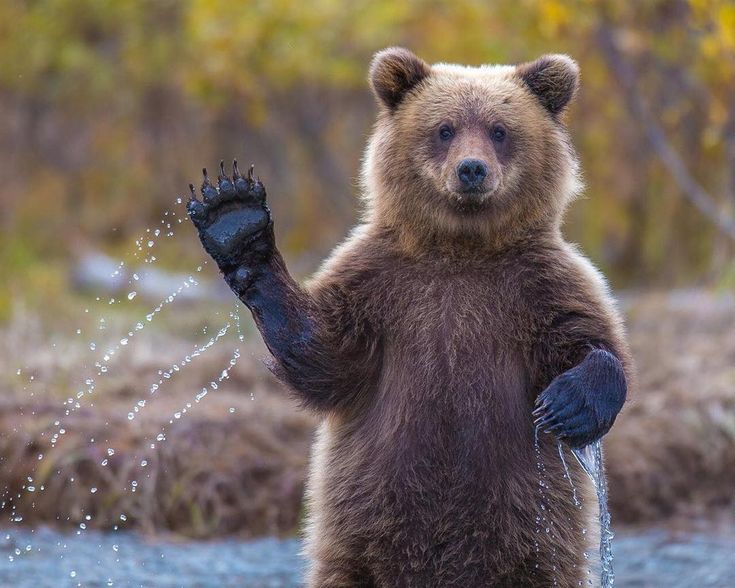
People were so afraid of them that they invented new words just to avoid using the real name. I don’t know what’s wrong with the Romance-language speakers and why they’re so fearless—ursa is still perfectly fine there. But Russia? Russia is having a lot more fun. What do we call the honey-knower in fairy tales? Right—we don’t even call him “bear”! He’s Misha, Mishka, Mishenka, Clubfoot, Mikhail Potapych, Mikhail Ivanych. A EUPHEMISM ON TOP OF A EUPHEMISM. While lullabies warn that the little wolf will bite you on the side, bears are never mentioned at all—because if that one bites you, all that’s left is a lonely ass on the floor.
Now. There’s also the Hungarian name Orsi (or Orsolya). Ring any bells? For example, the Italian word for “she-bear” is orsa. Or the name Ursula, which is itself the Latin word for “she-bear” with a cute diminutive suffix. In short, Orsi is also a little she-bear.
So if you’re afraid of accidentally summoning Orsi by saying her real name, you can just call her Misha. No one will understand you, of course—but it’ll be cool.